Green Belt Approval for New Homes Near Chelmsford
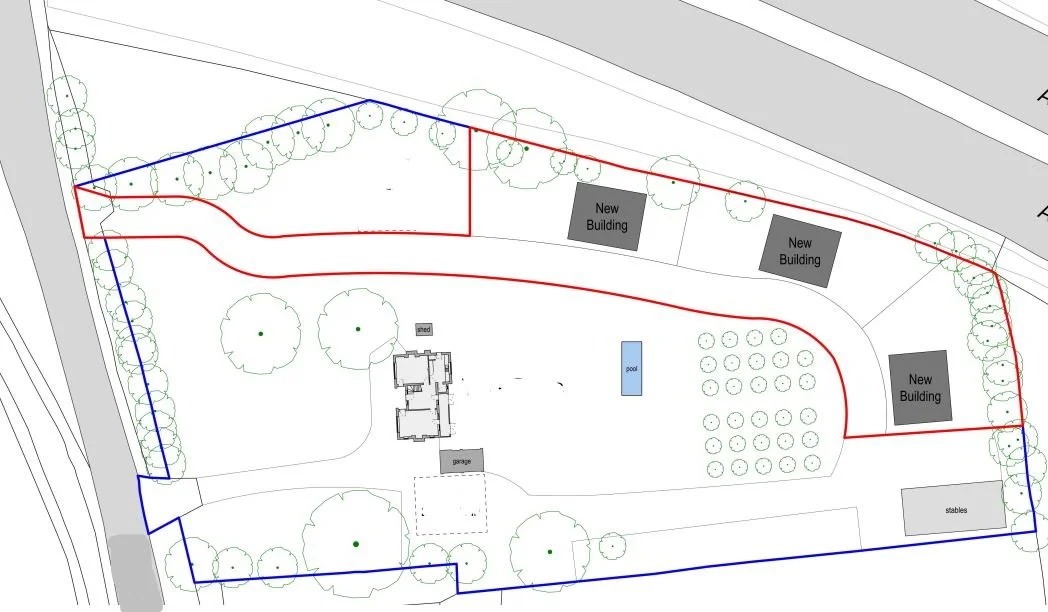
Securing planning permission in the Green Belt is never straightforward—particularly where new residential development is proposed. That’s why we’re delighted to announce a recent success in an edge of village location near Chelmsford, Essex, where Permission in Principle (PIP) has been granted for up to three new dwellings.
The Planning Challenge
The site sits within the Metropolitan Green Belt, where national and local policy strictly controls new development.
New buildings are considered inappropriate development unless they fall within specific exceptions or are supported by very special circumstances.
Despite this, the principle of development was ultimately accepted.
The Planning Strategy
The key to success lay in a clear and robust planning strategy, focused on:
1. Previously Developed Land (PDL) and Grey Belt
The site formed part of a residential curtilage and was successfully argued to meet the definition of previously developed land.
In addition, the concept of Grey Belt—land that does not strongly contribute to the core purposes of the Green Belt—was used to reinforce the case that the site represented a logical and sustainable opportunity for development.
2. Impact on Openness
A carefully reasoned case demonstrated that up to three modest dwellings could be delivered without causing substantial harm to the openness of the Green Belt. The officer agreed that even development meeting minimum space standards could be accommodated appropriately.
3. Sustainable Location
The site’s accessibility—within walking distance of village services and connected by footways—helped reinforce its suitability for residential use.
4. Strong Planning Context
The surrounding pattern of development, including recent permissions nearby, helped establish a clear precedent for residential intensification in this location.
The Outcome
Permission in Principle was granted, confirming that:
The location is suitable for residential development
The land use is acceptable
The amount of development (up to three dwellings) is appropriate
This represents a significant step forward, de-risking the site ahead of the Technical Details stage.
This case highlights an important point - Even within the Green Belt, development opportunities do exist—if approached with the right strategy, evidence, and understanding of policy.
By focusing on the correct policy hooks and presenting a clear, logical case, it is often possible to unlock sites that might initially appear constrained.
Need Expert Planning Advice?
If you own land in the Green Belt or are dealing with a challenging planning site, we can help you unlock its potential.
