
Green Belt Infill Dwelling Approved in Chelmsford
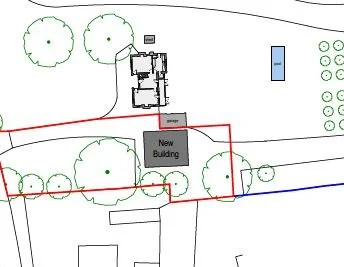
We are delighted to have secured Permission in Principle (PiP) for a new infill dwelling in Margaretting, Chelmsford — a site located within the Metropolitan Green Belt.
The Infill Proposal
The application sought Permission in Principle for a single residential dwelling on land forming part of the side garden to an existing property.
The site benefits from an established vehicular access and sits within walking distance of the village hall and core services, placing it in a sustainable village location.
Importantly, adjacent land has commercial units on it and recently secured consent for three dwellings, reinforcing the residential context. The proposal represents logical, small-scale infill within an established built-up frontage.
Understanding the PiP Process
Permission in Principle is a two-stage consent route introduced to simplify and speed up housing delivery.
Stage 1 – Permission in Principle (PiP): Establishes whether the site is acceptable in principle, considering only:
Location
Land use
Amount of development
Stage 2 – Technical Details Consent (TDC): Assesses the detailed design, layout, access, highways, drainage, landscaping and other technical matters.
At the PiP stage, there is no requirement to submit full drawings, although we presented an indicative site layout. The Council considers whether, in principle, a dwelling of an appropriate scale could be accommodated.
In this case, the Council concluded that a modest single-storey dwelling compliant with Nationally Described Space Standards could be delivered without causing substantial harm to Green Belt openness.
The Green Belt Planning Position
Development in the Green Belt is tightly controlled under the National Planning Policy Framework (NPPF). Paragraph 153 confirms that inappropriate development is, by definition, harmful and should not be approved except in very special circumstances.
However, Paragraph 154(e) provides an important exception:
Limited infilling in a village may be acceptable. Paragraph 154(g) provides another important exception: Limited infilling or redevelopment of previously developed land (PDL) may be acceptable where it does not cause substantial harm to openness.
In this case, the site is within the built confines of an estblished village and was accepted by the council as previously developed land. The Council assessed whether a dwelling could be accommodated without materially eroding openness. Given the modest scale envisaged, officers concluded that substantial harm would not arise.
The proposal also aligned with local development plan policies protecting the Green Belt while allowing appropriate redevelopment of PDL.
Habitats and RAMS
As the site lies within the Essex Coast Recreational Disturbance Avoidance and Mitigation Strategy (RAMS) Zone of Influence for the Blackwater Estuary SPA and Ramsar site, a financial contribution was secured to mitigate recreational impacts. This ensured compliance with the Conservation of Habitats and Species Regulations 2017.
Highways and Next Steps
While Essex County Council Highways raised concerns regarding visibility from the existing access, these matters fall to be addressed at the Technical Details Consent stage. The PiP confirms that the principle of one dwelling is acceptable; detailed access solutions will now be progressed through further design work and engagement with the Local Highway Authority.
Why This Matters
Green Belt sites are often assumed to be entirely off-limits to development. This case demonstrates that:
Small-scale infill can be acceptable
Previously developed land is a key opportunity
The PiP route can de-risk sites before full design costs are incurred
A carefully structured planning case grounded in national and local policy can succeed
Thinking About Developing in the Green Belt?
If you own land in the Green Belt and believe it may have infill or redevelopment potential, early planning advice is critical. A robust strategy — particularly where PiP may be appropriate — can significantly reduce risk and upfront cost.
We specialise in unlocking complex sites through clear planning strategy and policy-led argument.
Get in touch today to discuss your site’s potential.