
Planning Approval for 3 no. Bungalows in Clacton-on-Sea
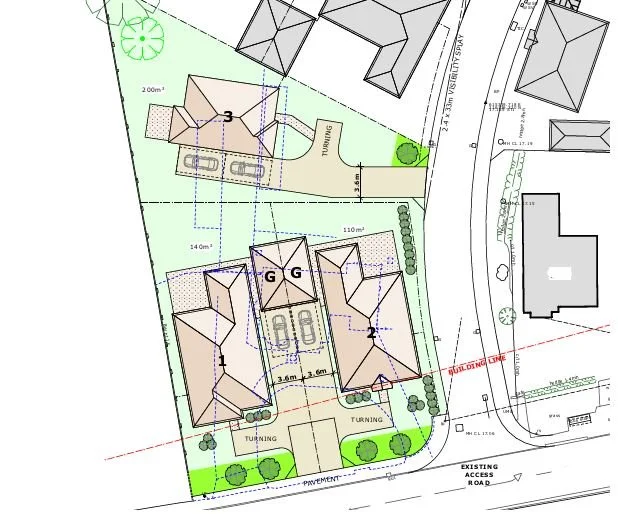
Image by DBC
We are delighted to announce that full planning permission has been granted for the demolition of an existing dwelling and the construction of three high-quality bungalows in Clacton-on-Sea (Tendring District).
This approval marks a positive outcome following earlier refusals on the site and demonstrates how thoughtful design, technical evidence and proactive engagement with the Local Planning Authority can successfully unlock development potential.
The Proposal
The application sought full planning permission for:
Demolition of the existing two-storey detached dwelling
Erection of three detached, three-bedroom bungalows
The site lies within the defined Settlement Development Boundary for Clacton-on-Sea, meaning the principle of residential development was supported by local planning policy.
However, as with many infill and redevelopment sites, the key considerations centred on design quality, residential amenity, highways safety, drainage and ecology.
Overcoming Previous Refusals
This application followed a previously refused scheme for a flatted development.
Our strategy sought to respond to the Council’s design concerns, and provide a robust technical evidence base to address all environmental matters upfront.
Design Revisions and Layout Improvements
The approved scheme delivers three detached bungalows that reflect the established character of the surrounding area.
The two dwellings fronting the main road maintain a generous set-back from the highway, reinforcing the established building line and preserving the spacious character of this part of the street scene.
Through careful refinement, the scheme evolved into a form of development that the Council concluded would integrate successfully with its surroundings and enhance the overall quality of the site.
Highways and Access
Given the site’s location on a classified road, highways considerations were central to the assessment.
The scheme involved repositioning the existing access to improve visibility splays and introducing a new access from an adjacent road. A detailed Visibility Assessment and Swept Path Analysis were submitted to demonstrate safe and suitable access arrangements.
Following review, the Highway Authority raised no objections.
Each dwelling provides compliant off-street parking and turning space, alongside electric vehicle charging provision and cycle storage.
Ecology, Trees and Biodiversity
Ecology was a critical issue given the previous refusal.
To address this, the application was supported by:
A Preliminary Roost Assessment;
A Bat Emergence Survey;
A Biodiversity Net Gain Assessment and Metric calculation;
An Arboricultural Impact Assessment.
The ecological reports confirmed that the development would not result in harm to protected species.
With this comprehensive technical evidence in place, the Council confirmed there were no ecological objections.
A Successful Planning Outcome
Ultimately, the Council concluded that:
The principle of development was acceptable within the settlement boundary;
The scale, layout and design were appropriate to the character of the area;
Residential amenity would be protected;
Highways safety could be satisfactorily addressed;
Ecology and biodiversity matters were resolved through robust evidence and mitigation.
Planning permission was therefore granted under delegated powers.
Looking to Unlock Development Potential?
If you have are considering redevelopment of an underutilised property, we can help you navigate the planning process with confidence.
From feasibility appraisal and design development through to submission and negotiation with the Local Planning Authority, we provide clear, pragmatic advice tailored to your site.
Get in touch today to discuss how we can help turn your development aspirations into a planning success.


Commodo cursus magna, vel scelerisque nisl consectetur et. Donec id elit non mi porta gravida at eget metus.