
Green Belt Permission Secured for a New Access to Secondary School
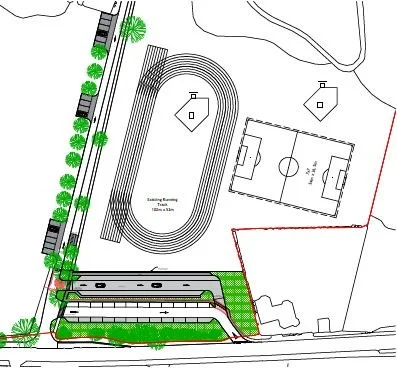
Image by Academy Estate Consultants
A Positive Outcome for Sensitive Green Belt Development
We are delighted to share that planning permission has been granted for a new vehicular access serving a High School, following a successful application to Harrow Council.
The approval represents a carefully considered response to site-specific challenges, balancing educational infrastructure needs with the strict policy requirements governing development within the Green Belt.
Our team worked closely with the local authority and key stakeholders to design and justify an access solution that meets operational and safety needs while maintaining the openness and character of the surrounding landscape.
Navigating the Green Belt Policy Context
Development within the Green Belt is subject to some of the most stringent planning controls in the National Planning Policy Framework (NPPF). Paragraph 153 of the NPPF sets out that the essential characteristics of Green Belt are their openness and permanence, and that development should only be permitted in very special circumstances (VSC).
In this case, the proposed access fell within designated Green Belt land adjacent to the established school site. As such, the key challenge lay in demonstrating that the scheme would not cause unacceptable harm to the Green Belt’s openness or purpose, and that clear justification existed to outweigh any perceived harm.
Through a robust planning statement and supporting technical evidence, we demonstrated that the access would deliver substantial public benefits — including improved traffic safety, reduced congestion at existing entry points, and enhanced operational efficiency for the school — all without undermining the fundamental openness of the Green Belt.
Demonstrating “Very Special Circumstances”
The planning officer’s report recognised that the proposal, while technically constituting inappropriate development in Green Belt terms, was supported by a strong and well-evidenced case for very special circumstances.
Key factors underpinning the Council’s decision included:
Educational need and safety benefits: The new access will relieve pressure on the existing school entrance, improving the safety of pupils and staff during peak times.
Minimal landscape and visual impact: Careful alignment and design ensure the access integrates with existing features, with new planting proposed to mitigate visual effects.
Environmental enhancements: Sustainable drainage measures and native landscaping will help to maintain the site’s ecological value.
Public and community benefit: The proposal supports the ongoing operation of a valued local school, enhancing accessibility and sustainability.
Together, these considerations were found to clearly outweigh any limited harm to the Green Belt, satisfying the “very special circumstances” test set out in the NPPF and Local Plan policies.
A Model for Pragmatic Green Belt Solutions
This permission is a testament to the importance of proactive engagement and evidence-led design when working within the Green Belt.
It demonstrates that with careful justification, even development typically regarded as “inappropriate” can be supported where there is clear public benefit and negligible harm to openness.
Contact Us
This successful outcome adds to our growing portfolio of Green Belt projects and reinforces our reputation for navigating complex policy environments.
If you are exploring development opportunities within the Green Belt — whether for educational, residential, or community projects — our team can help you navigate the complexities of national and local planning policy.
Get in touch to discuss how we can support your next project and turn challenging planning constraints into successful approvals.